Volume 1
Vienna at the Turn of the Year.
Suggested Reading
A curated companion to the city, its music, art and stories
// Suggested Reading
1. The Hare with Amber Eyes: A Hidden Inheritance
Edmund de Waal | Vintage, 2011 | ISBN 978-0-099-53855-1
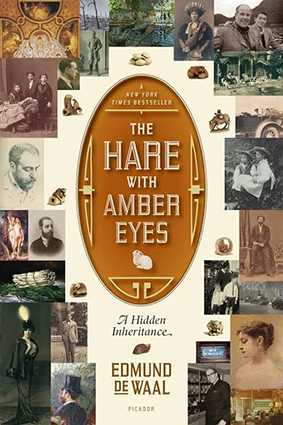
Beginning with a collection of Japanese netsuke, de Waal traces the fortunes of the Ephrussi family from Paris to Vienna and through the upheavals of the twentieth century. It is an intimate story of family, art, collecting, memory and loss. The Vienna chapters are particularly relevant to our journey, illuminating the cultured Jewish Vienna that flourished before the Anschluss and adding another dimension to the palaces, collections and streets we encounter.
2. The Radetzky March
Joseph Roth | Penguin Classics, 2002 | ISBN 978-0-14-118527-8
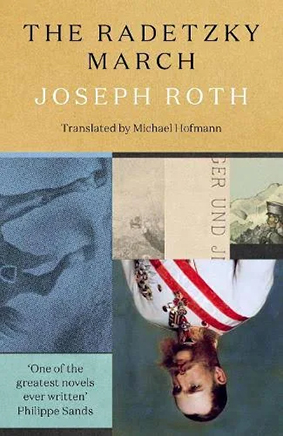
Fiction. Through three generations of the Trotta family, Roth chronicles the slow decline of the Austro-Hungarian Empire and the world of Emperor Franz Joseph. Melancholy, humane and frequently very funny, it captures something of the rituals, loyalties and contradictions of Habsburg society. Reading it before Vienna makes the Hofburg, Ringstrasse, imperial collections and ceremonial traditions feel like remnants of a recently inhabited world rather than historical monuments.
3. The World of Yesterday: Memoirs of a European
Stefan Zweig | Pushkin Press, 2024 | ISBN 978-1-80533-115-5
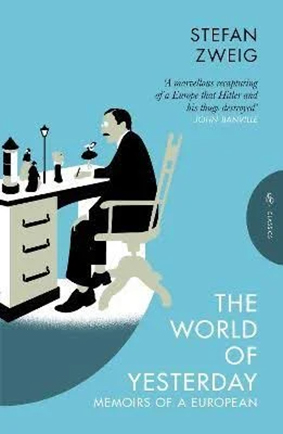
Zweig looks back from exile upon the cultured, cosmopolitan Vienna of his youth and the European civilisation swept away by two world wars. Music, literature, cafés, theatre, intellectual life and the final years of the Habsburg world run through this remarkable memoir. It may be the most directly relevant book on this list: Zweig allows us to see the Vienna we visit through the memory of someone who once belonged to its cultural life.
4. Beware of Pity
Stefan Zweig | Pushkin Press, 2023 | ISBN 978-1-80533-022-6
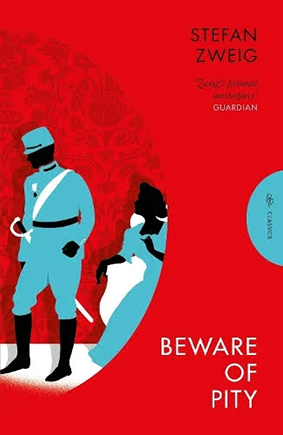
Fiction. In 1913, a young Austro-Hungarian cavalry officer inadvertently humiliates a disabled young woman and, out of embarrassment, begins visiting her family. Compassion gradually becomes obligation, with consequences neither anticipates. Zweig's only completed novel is psychologically acute, but it also evokes the manners, assumptions and social structures of the empire immediately before its collapse. It complements The World of Yesterday beautifully: one remembers that vanished society; the other allows us to inhabit it.
5. The Story of Art
E. H. Gombrich | Phaidon Press, 2023 | ISBN 978-1-83866-658-3
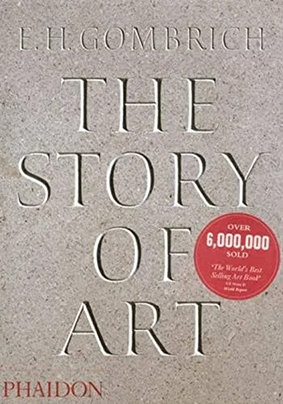
Vienna-born Gombrich's classic remains one of the most approachable introductions to Western art. Rather than teaching the reader what to admire, he explains how artists saw problems and found new ways of solving them. That makes it an excellent companion to our guided visits to the Belvedere, Kunsthistorisches and Leopold museums: enough context to help us look more attentively without turning an encounter with art into an academic exercise.
6. The Works: Gustav Klimt — The Essential Masterpieces
Rosalind Ormiston | Flame Tree Publishing, 2023 | ISBN 978-1-83964-993-6
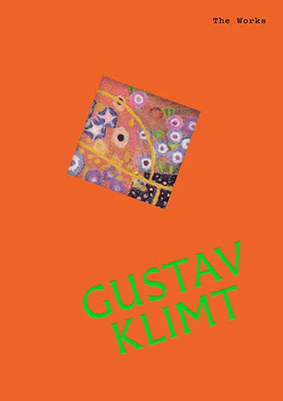
A richly illustrated introduction to Klimt's paintings and drawings, this is particularly relevant to our visit to the Belvedere and our broader encounter with Vienna around 1900. It allows The Kiss to be understood not as an isolated image reproduced endlessly on postcards, but as part of Klimt's development and the extraordinary artistic ferment of his city. It is also a book to browse rather than necessarily read from beginning to end.
7. Mozart: A Life
Paul Johnson | Penguin Books, 2014 | ISBN 978-0-14-312606-7
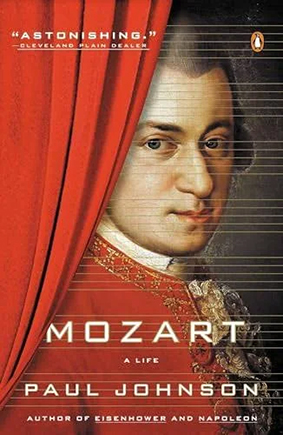
Johnson offers a compact and accessible portrait of Mozart, concentrating on the composer, his character and his astonishing creative output rather than producing an exhaustive musicological biography. It is particularly suitable preparation for our intimate Mozart Ensemble concert: after encountering music in Vienna's grand halls, we hear Mozart at close quarters, recalling the smaller rooms, patrons and audiences for whom much eighteenth-century music was originally created.
8. Tchaikovsky's Empire: A New Life of Russia's Greatest Composer
Simon Morrison | Yale University Press, 2026 | ISBN 978-0-300-28431-7
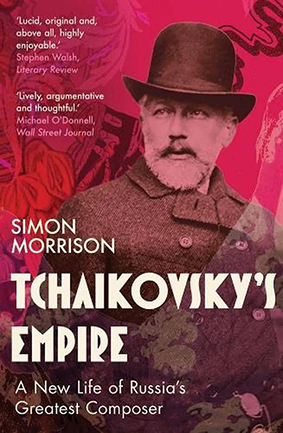
Morrison revisits Tchaikovsky by placing him firmly within the social, political and imperial Russia in which he lived, challenging the familiar portrait of an isolated, perpetually tormented Romantic. For our journey, its most obvious connection is the final major performance: Swan Lake at the Vienna State Opera. Reading about the composer behind music that has become so familiar allows the ballet to be encountered afresh rather than merely recognised.
9. Faust, Part I
Johann Wolfgang von Goethe | Penguin Classics, 2005 | ISBN 978-0-14-044901-3
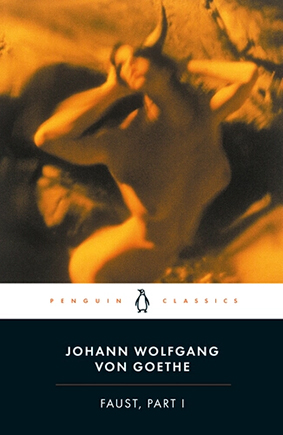
Goethe's great drama is the essential literary companion to Berlioz's La Damnation de Faust. Faust, dissatisfied with knowledge and life itself, enters into his bargain with Mephistopheles and becomes entangled in the tragedy of Gretchen. Berlioz did not simply turn Goethe's play into an opera, but Goethe provides the imaginative world from which his dramatic legend emerged. Reading even Part I before Vienna will make our evening at the Staatsoper considerably richer.
10. Berlioz: A Listener's Guide
Victor Lederer | Amadeus Press/Bloomsbury, 2021 | ISBN 978-1-5381-3558-7
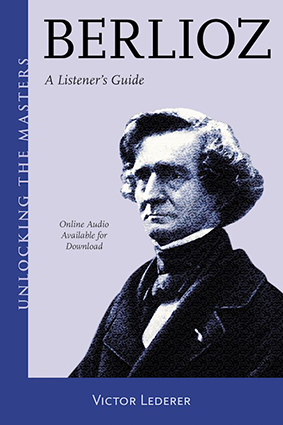
A much less daunting introduction than a major Berlioz biography. Lederer explains the composer's distinctive musical language and pays particular attention to the dramatic works, including La Damnation de Faust. It is useful for anyone intrigued by Berlioz but unsure quite what to listen for. His orchestration, sudden changes of mood and extraordinary dramatic imagination become easier to recognise – and considerably more rewarding – once one understands how deliberately unusual they were.
11. Vivaldi: The Master Musicians
Michael Talbot | Oxford University Press, 2001 | ISBN 978-0-19-816497-5
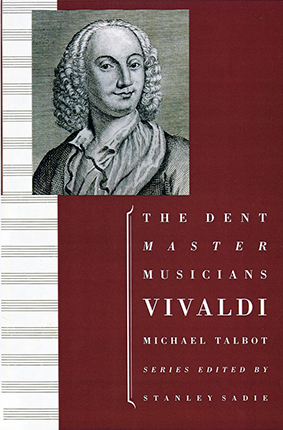
Talbot places Vivaldi within eighteenth-century Venice and examines both his life and music, including the instrumental works upon which his modern reputation largely rests. This is the more scholarly selection on the list, but it offers valuable context for hearing The Four Seasons on period instruments. Particularly interesting is the opportunity to rediscover a work so familiar that we can easily stop listening to it attentively.
12. Tchaikovsky's Ballets: Swan Lake, Sleeping Beauty, Nutcracker
Roland John Wiley | Oxford University Press, 1991 | ISBN 978-0-19-816249-0
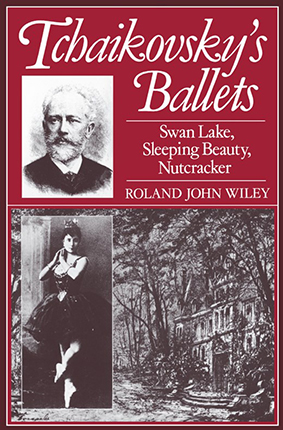
Wiley combines musical analysis with the history of the original productions, drawing upon documentary material surrounding the creation and staging of Tchaikovsky's three great ballets. For our purposes, the Swan Lake material is particularly valuable because the work we encounter in Vienna is not simply Tchaikovsky's score: ballet is also choreography, staging and theatrical tradition. Our Staatsoper performance uses Rudolf Nureyev's celebrated interpretation, adding another layer to that history.
13. Beethoven: Anguish and Triumph
Jan Swafford | Faber & Faber, 2014 | ISBN 978-0-571-31255-9
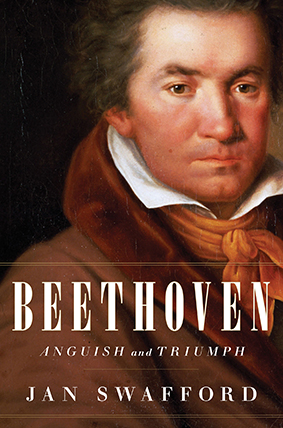
Swafford sets out to recover Beethoven the human being from Beethoven the monument, combining biography with accessible discussion of the music and the intellectual and political world surrounding it. It is the most substantial book on this list and certainly not required reading, but for anyone wanting to go deeper it provides exceptional preparation for hearing Beethoven's Ninth Symphony in the Great Hall of the Vienna Konzerthaus.
14. Johann Strauss: The End of an Era
Egon Gartenberg | Penn State University Press, 1990 | ISBN 978-0271011318
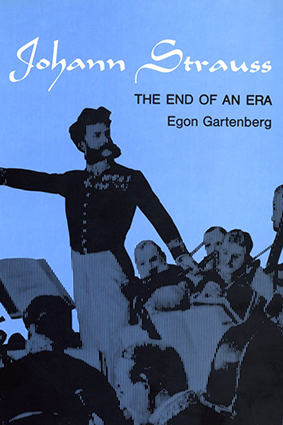
Gartenberg looks beyond the familiar image of Strauss as simply the “Waltz King” to explore the composer and the Vienna that shaped him. Behind the elegance and exuberance of the waltzes lay a Habsburg Empire facing political, social and cultural upheaval. Strauss nevertheless did more than perhaps any other composer to make Vienna – and the waltz – famous throughout the world. The book provides particularly rewarding context for both our New Year’s Concert at the Volksoper and Die Fledermaus at the Vienna State Opera.